Global HIV Funding Crisis Sparks AIDS Death Warning By UNAIDS

UNAIDS warns that the global HIV funding crisis could lead to 4 million AIDS-related deaths by 2029 as international donors cut life-saving support
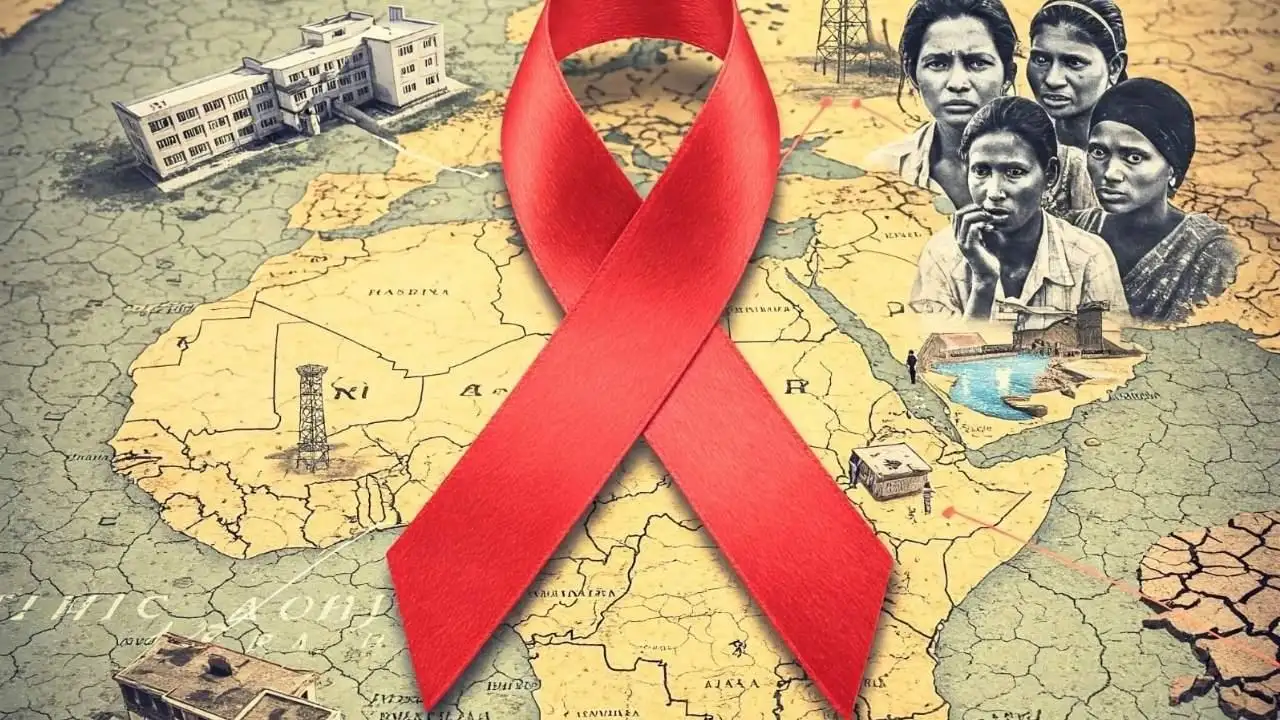
The global HIV funding crisis has been described as a “ticking time bomb” by the United Nations’ AIDS agency, which warns that four million people could die of AIDS-related illnesses by 2029 if the world fails to act.
Also read: Daddy Freeze Raises Alarm On 2Face Idibia’s Mental Health
This stark projection came in UNAIDS’ 2025 report, Aids, Crisis and the Power to Transform, where officials outlined how abrupt donor withdrawals—most notably from the United States—are already crippling front-line services and reversing decades of progress in the global fight against HIV.
Speaking at the launch of the report, UNAIDS Executive Director Winnie Byanyima said, “This is not just a funding gap—it’s a ticking time bomb.”
The global HIV funding crisis intensified earlier this year when the US government signalled a shift in its foreign assistance strategy, reducing its pledge to the President’s Emergency Plan for AIDS Relief (PEPFAR), which was slated to provide $4.3 billion in 2025.
PEPFAR has long been a cornerstone of HIV testing and treatment in the world’s hardest-hit regions.
According to the report, 80 percent of HIV prevention efforts in low- and middle-income countries depend on international funding.
Without it, UNAIDS projects an additional 6 million infections and 4 million preventable deaths by 2029.
“New HIV infections have dropped by 40 percent, and AIDS-related deaths have declined by 56 percent since 2010,” noted Angeli Achrekar, Assistant Secretary-General for UNAIDS.
“We were on track to end AIDS as a public health threat by 2030. But this progress is now at risk.”
She described PEPFAR as one of the most successful public health programmes in history and urged other global partners to step in and preserve the momentum.
In addition to funding cuts, UNAIDS also flagged the rise in punitive laws across several countries that criminalise populations most vulnerable to HIV—such as sex workers, transgender people, and drug users.
These laws increase stigma and violence, both of which hinder access to prevention and treatment.
The report warned that gains in scientific innovation—such as long-acting injectable medication and improved PrEP access—risk being undermined by disrupted supply chains, many of which have been affected by global conflicts.
Sub-Saharan Africa remains the region most impacted by the global HIV funding crisis. In 2024, it accounted for half of the world’s 9.2 million people without access to HIV treatment.
UNAIDS cited economic constraints such as debt burdens, weak tax systems, and low domestic health budgets as major barriers to increasing internal investment.
Despite this, South Africa is one of the few success stories, currently funding 77 percent of its AIDS response. Its 2025 national budget includes a 3.3 percent increase in HIV and tuberculosis funding over the next three years.
Seven African countries have now achieved the UNAIDS 95-95-95 target: 95 percent of people living with HIV know their status, 95 percent of those are on treatment, and 95 percent of those on treatment are virally suppressed.
Yet UNAIDS warns that scaling this model globally will be difficult without renewed international solidarity.
Achrekar emphasised, “Prevention is the last thing that is prioritised, but we will never be able to turn off the tap of new infections without focusing on prevention as well.”
She concluded by calling on world leaders to recommit to the HIV fight.
Also read: NLNG Donates CT Machine To Lokoja Hospital
“The HIV response was forged in crisis and built to be resilient. Now is the time for global solidarity to ensure it remains sustainable, inclusive, and led by the countries most affected.”