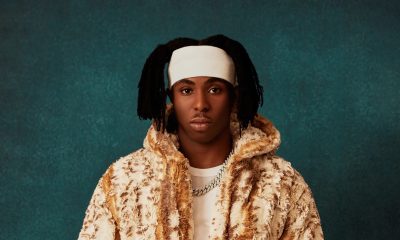
Tiwa Savage shares how persistence secured her Mavin Records deal and why it changed her life and career, calling it a turning point in her success
Tiwa Savage record deal with Don Jazzy’s Mavin Records was not a stroke of luck—it was the product of sheer determination and a refusal to give up.
The acclaimed Nigerian singer recently opened up about the relentless pursuit that led to her breakthrough moment in 2012.
Savage, who was already collaborating with members of the now-defunct Mo’ Hits Records, shared that she was never officially signed until she asked again, and again.
“I wasn’t part of Mo’Hits. I had done songs with Jazzy and stuff, but I wasn’t officially signed. So when he started Mavin, I went to him and said, ‘Can you sign me now?’” she said.
Her perseverance paid off when Don Jazzy finally agreed. The singer’s reflection on this moment highlights the crucial role of persistence in her journey.
“I asked him again. Oh my God, I don’t have shame. I asked again. And then he just said yes—just like that,” she recounted in her chat with Afrobeats Intelligence.
Before Mavin, she had pitched herself to several record labels in Nigeria. Each one turned her down. She believes many could not understand or support her blend of R\&B and Afrobeats.
“They all said no. I think it was because they didn’t believe blending R\&B and Afrobeats would work,” she explained. “They’d say, ‘You’re a great singer, you look amazing,’ but I never got a call back.”
That rejection didn’t deter her. Savage had already left her life in Los Angeles behind, selling her car and giving up her home, to pursue music in Africa. “I couldn’t go back to L.A. and start writing songs for people again. I had to stay,” she added.
Her debut single, Kele Kele Love, opened the door to Nigerian audiences, but it was the release of Love Me that secured her star status. “When ‘Love Me’ dropped, it was like, ‘Wow! I could see it—this music thing could actually work,’” she said.
Looking back on her time at Mavin, Savage credits the label with not only developing her artistry but also moulding her into a better businesswoman.
“Mavin is still like family,” she said. “Most labels don’t care about your personal issues, but at Mavin, it felt different. Don Jazzy is invested in you as a person, not just in your numbers.”
She admitted that the full importance of being signed to the right label only dawned on her after she left. In 2019, Savage became the first Nigerian female act to sign with Universal Music Group, a move that widened her global reach.
“Who you sign to is very important. I didn’t appreciate it until after I left. Some labels see you as a dollar sign, and once you stop making hits, that’s it,” she explained.
Despite her global success, Savage has never signed an artist herself. “My heart can’t take it. The rate of success is very slim,” she said. “Even if you’re lucky and get hits, sustaining a career for five or ten years is even harder.”
Her journey, however, hasn’t been without personal challenges. The star opened up about the struggle of balancing music with motherhood, especially during the lockdown. She also spoke candidly about discouraging her son from pursuing a music career, citing its difficulties and pressures.
“There’s no way he’s going into music. Hell no,” she stated. “I want him to find his own path. Music is tough.”
Savage remains one of the most prominent female figures in Afrobeats. Yet, she continues to battle gender bias in the industry. “I hate that ‘for a woman’ comment. Like, ‘You’ve done well—for a woman.’ I want to be there because I’m the best.”
Now 45, she said starting her career later than others worked in her favour. With a solid understanding of music and contract law, she avoided common industry pitfalls. “I studied music and understood contracts—terms like ‘in perpetuity’. That helped me.”
Tiwa Savage’s story is one of resilience, risk-taking, and relentless pursuit of purpose. Her journey proves that success is often shaped by what others cannot see—grit, resolve, and the courage to ask again, even when the answer has been no.