UNILAG stages Once Upon Elephant, combining culture and political insight in a theatrical exploration of dictatorship and truth through Yoruba storytelling
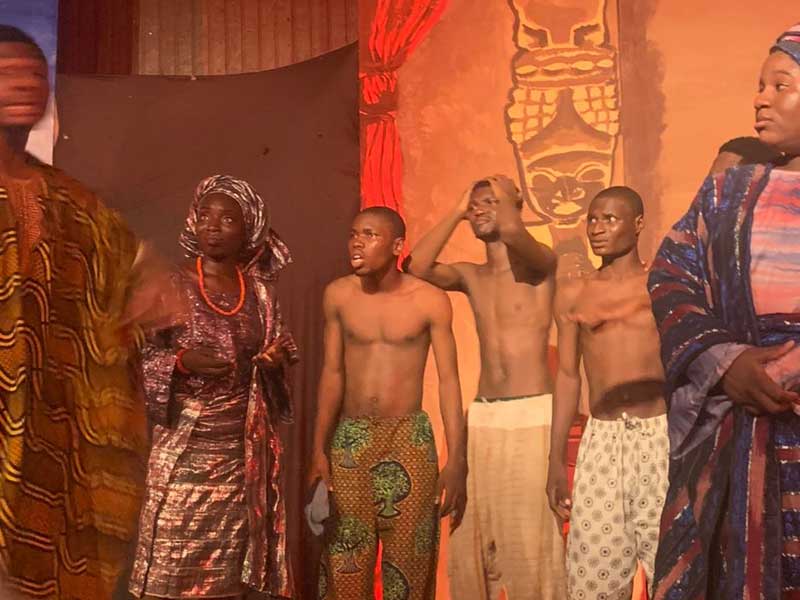
UNILAG stages Once Upon Elephant for a powerful blend of culture, performance and political commentary at the University of Lagos’ Creative Arts Department.
The student‑led production, in collaboration with MadCity and Theatre Productions, tackled the perils of dictatorship and celebrated the power of truth through rich Yoruba storytelling.
Once Upon Elephant is based on the WAEC‑recommended play by Prof. Bosede Afolayan.
It centres on Iya Agba, a wise elder who challenges the ruthless King Ajanaku and helps restore peace to a community suffering under tyranny.
The production wove music, dance and Yoruba parables into a narrative that resonated with students from several secondary schools.
Once Upon Elephant draws directly from well‑established themes of autocracy in African drama.
Critics note that the play critiques the “sit‑tightism” and self‑perpetuating politics common on the continent, using traditional motifs—like the elephant and the tortoise—to symbolise arrogance and cunning in leadership.
In her address after the show, Prof. Afolayan emphasised the value of accountability in governance and personal conduct. She warned: “Whatever anyone sows, he shall reap. Be careful of your actions,” urging students to embrace integrity and reject violence.
The play’s producer, Segun Ige of Theateen Productions, said the performance aimed to animate literature for exam‑going students.
“Seeing the play performed helps them grasp the themes, characters and conflicts more deeply than reading alone,” he explained.
Educators in attendance praised the staging for its educational impact.
English teacher Israel Adelaja said the play helped students understand societal dynamics and brought Yoruba culture to life in a relatable, insightful way.
Filmmaker Confidence Fasinu added that visual storytelling sticks with learners: “Watching this play will help them remember plot points, character arcs, and themes when writing their WAEC exams.”
When there is oppression and dictatorship, by not speaking out, we lose our dignity.
Once Upon Elephant mirrors classical Afrodiasporic resistance narratives by blending folklore with modern civic concerns.
Set in an unnamed Yoruba village, the play uses traditional elements and oral story techniques to deliver its commentary on power abuse and resilience .
The performance received widespread acclaim online for its dynamic portrayal of cultural and political issues.
Attendees attributed the play’s impact to its balance of entertainment and moral depth.
The university’s effort to incorporate theatrical education with civic consciousness was also noted as exemplary.
Once Upon Elephant also reaffirms the importance of university theatre. It acts as a living classroom where academic texts are brought to life, forging deeper connections between theory and practice in the arts.
UNILAG’s staging made literature accessible and memorable for a new generation.
The collaborative work between playwright, students, producers and cultural organisations illustrates how theatre can catalyse conversations on leadership, ethics and community responsibility.
Once Upon Elephant transformed a textbook into a cultural event, re‑energising the WAEC syllabus for the visual age.
As Nigerian theatre continues evolving, UNILAG stages Once Upon Elephant represents a breakthrough in engaging youth with social and political themes.
It reinforces theatre’s role as an educational and transformative aid in shaping informed citizens.
The production has inspired calls for wider inclusion of university theatre in academic curricula.
Organisers hope the play will tour other tertiary institutions, secondary schools and public venues across Nigeria to amplify its message.
Ultimately, UNILAG stages Once Upon Elephant to spotlight the dangers of unchecked authority and the power of collective action.
Through vivid storytelling and traditional motifs, the performance succeeded in making literary critique both entertaining and emotionally resonant.